The Heat Over Bel Air
The May sun above Los Angeles hung heavy in the sky, turning the city hazy and making the pavement ripple like water. Beyond the tall hedges and stone walls surrounding my Bel Air estate, heat waves shimmered endlessly. Inside my glass-lined office, the air conditioning hummed quietly. Outside, the garden was trimmed with perfect precision. My inbox overflowed with contracts that promised to make my fortune even larger.
My name is Adrian Calloway. For over ten years, I’ve built luxury hotels, office towers, and shopping centers across the country. The press calls me “brilliant,” “driven,” “self-made.” The numbers support it. But the truth? None of it excites me anymore. Success filled every hour of my life while slowly emptying something inside me.
I stood staring at the flawless lawn, the ivory roses, the sharp edges of the infinity pool. Everything looked perfect. Everything felt lifeless.
Then one of the security monitors flashed.
Someone was standing at the front gate.
Normally, the guards turned solicitors away before they ever reached my driveway. But somehow, a small figure had gotten through. I zoomed in.
A girl. Maybe twelve years old. Thin, dark hair pulled into a messy ponytail. She wore a faded school polo hanging loosely on her frame. In one hand, she carried a stretched plastic grocery bag heavy enough to pull her sideways. Inside were bright oranges.

She wiped sweat from her forehead, steadied herself, and pressed the intercom.
Ignoring her would have been easy. Let the heat send her toward the next mansion while I returned to spreadsheets and business projections. That’s what the man I’d become usually did.
But her shaking legs, the way she pressed her lips together to stop herself from crying—that pierced straight through my indifference.
I pressed the intercom. “Yes?” My voice sounded colder than I intended.
She jumped slightly. “Good afternoon, sir. I’m sorry to bother you. My name is Camila.”
Her voice was soft but brave—the kind of politeness children learn when life has been much harder than it should be. “I’m selling oranges. They’re very sweet. Would you like some? I’m… trying to help pay for my mom’s medicine.”
In Los Angeles, stories like that are common. Illness can sound practiced. But her voice wasn’t rehearsed. It sounded exhausted. Honest.
“Stay there,” I said.
I stepped out of my office into the brutal heat. When the iron gate slid open, she looked up at me with cautious hope in her eyes.
“How much?” I asked. “Five for three dollars, sir. Or ten for five.”
I reached into my wallet. Nothing except large bills. I handed her a hundred-dollar note. “I’ll take all of them. Keep the change.”
Her eyes filled immediately. “All of them? Sir, I don’t have change for that.” “I don’t need change,” I replied. “But you look like you’re about to collapse.”
She swayed slightly. “I skipped breakfast.”
Something inside me broke. “Come inside,” I told her. “You’re not leaving like this.”
She hesitated for a moment—then nodded.
The Photograph Beneath the Staircase
Her worn sneakers left faint dusty marks across the marble floor as we walked inside. She stared up at the high ceilings and curved staircase with wide eyes.
“Do you live here alone?” she asked quietly. “Yes.”
That answer seemed to make her sad.
“Sit down,” I said. “I’ll get you something to eat.”
In the kitchen, I prepared a tray faster than I’d ever prepared for a board meeting—sandwiches, juice, fruit, protein bars. Taking care of her suddenly felt urgent. Necessary.
When I returned, she wasn’t sitting in the chair.
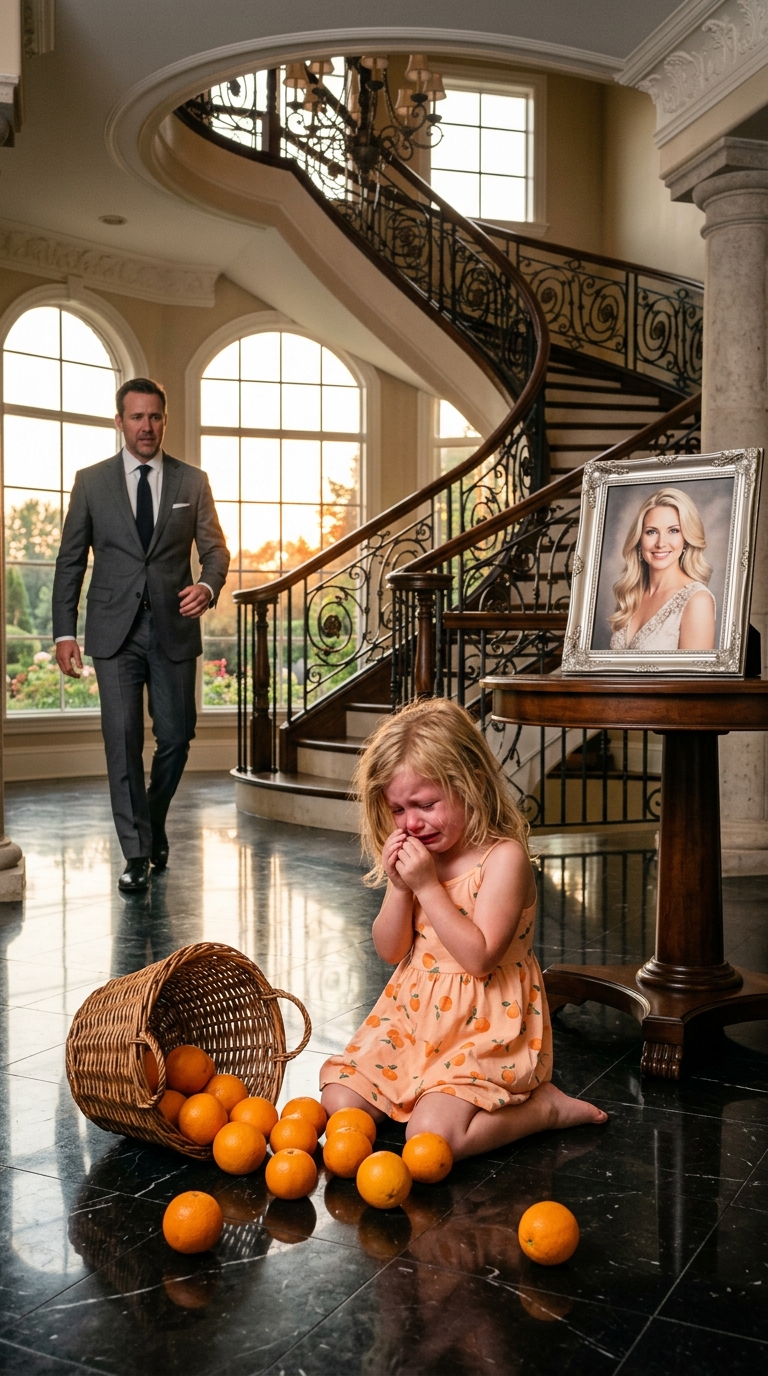
She stood beside the staircase holding a silver picture frame. The one photo I had never managed to pack away.
Elena.
I had taken that picture years earlier in a small downtown park—before she disappeared without explanation and left me carrying questions no amount of success could silence.
Camila’s shoulders shook as she gripped the frame. “Sir…” Her voice cracked. “Why do you have a picture of my mom?”
The room spun. “What did you say?”
“That’s my mom,” she whispered. “She looks younger… happier. But that’s her. Elena Rivera.”
My heartbeat thundered in my ears. I looked from the photograph to the little girl. Beneath the exhaustion and dirt, I finally saw it—the shape of Elena’s smile, the intensity in her eyes.
“Your mother’s name is Elena Rivera?”
Camila nodded as tears rolled down her cheeks. “She says your name sometimes. Adrian. She cries when she thinks I’m asleep.”
The timeline hit me like a punch. Twelve years old. Ten years since Elena vanished. “Take me to her,” I said hoarsely.

The Apartment on Alder Street
The drive east felt endless. Luxury neighborhoods disappeared behind cracked sidewalks and aging apartment buildings. Camila guided me through narrow streets until we stopped in front of a sagging brick complex.
“Third floor,” she said quietly.
Inside, the building smelled of damp walls and old plaster. The apartment was only one small room—a mattress in the corner, a hot plate resting on the floor. On the bed lay a thin woman struggling to sit upright.
“Elena,” I whispered.
She stared at me like I was a ghost. “Adrian?”
Camila rushed beside her. “Mama, he’s the man in the picture.”
I knelt next to the mattress as the entire world narrowed to that tiny space.
“Why did you leave?” I asked.
Tears slipped down Elena’s hollow cheeks. “Your mother,” she whispered. “She threatened me. Said I’d ruin your future. She told me you didn’t want a baby.”
My blood turned cold. “She lied,” I said. “I searched for you.”
Elena shook her head weakly. “I was pregnant when she came. I was terrified.”
I looked at Camila.
Twelve years old.
My daughter.
“We’re leaving,” I said firmly.
Blood Doesn’t Lie
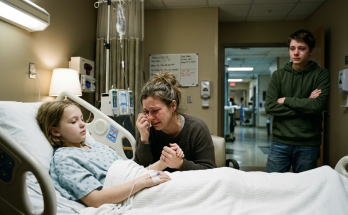
At the hospital, doctors diagnosed severe pneumonia and anemia. Elena had been fighting alone for far too long.
The following morning, a DNA test confirmed what my heart already knew: 99.9999% probability.
Camila was my daughter.
When I told her, she smiled softly and whispered, “I love you, Dad.”
That single word rebuilt something inside me that money never could.

Facing the Past
I confronted my mother at her Pasadena estate. She didn’t deny anything. She claimed she had only been “protecting” me.
“You stole my family,” I told her. “I’m done letting you control my life.”
That same day, I removed her from my company’s board.
A Home That Finally Felt Alive
Elena and Camila moved into my house. It stopped feeling like a museum and finally started feeling alive. Laughter replaced silence. Pizza nights replaced lonely dinners.
Two weeks later, I asked Elena to marry me—with the ring I had kept all these years. She said yes.
On our wedding night, beneath soft backyard lights, Camila ran laughing through the grass. Later, I stood in the hallway looking at two framed photographs: the old picture of Elena in the park… and a new one of the three of us sitting on the living room floor surrounded by pizza boxes and happiness.
“Dad?” Camila called, tugging on my hand. “They’re cutting the cake!”
As we walked outside together, I realized something important.
I had built skyscrapers tall enough to touch the clouds. But the most meaningful thing I ever built began the day a tired little girl knocked at my gate and asked softly:
“Sir… would you like to buy some oranges?”