It was a warm afternoon in February, and I had just arrived in front of the old ranch house in Shreveport. The wind chimes on the porch made a soft clinking sound. That sound used to mean peace and happy summer days, but now it felt strange, almost empty.
I hadn’t been back in over a year. Not because I didn’t want to come, but because they told me there was no one left here to visit.
When the front door creaked open, I didn’t get a hug. Instead, I heard a voice that was as rough as the rusty screen door. “So, you finally decided to show up,” Grandma said. Her arms were crossed and her eyes were sharp.
I froze. Her words hurt more than I thought they would.
“Grandma, what’s going on?” I asked as I stepped closer. “They told me you were in a nursing home, that you and Grandpa…”
She raised her hand to stop me. It shook a little, but the meaning was clear. That one small move felt like a slap.
“Your grandfather kept calling your name, Ruth,” she said. “He asked for you again and again while he was dying. He called you his little scientist, but you never came. You never even answered.”
My chest tightened and I could barely breathe. “That’s not true,” I said, my voice shaking. “Please let me see the number he was calling.”
She looked at me for a moment, then turned and walked into the house. When she came back, she handed me a small notepad. The edges were worn and the pages were a little bent. I looked down and saw Grandpa’s handwriting, but the number on the paper wasn’t mine. Not even close.
“This isn’t my number,” I whispered. “I’ve had the same one since high school.”
Grandma’s eyebrows pulled together. “They told us you changed it when you went to college,” she said in a quieter voice. “Said you didn’t want to be bothered, that you needed space, that you were ashamed of us.”
“No,” I said, taking a step back. My legs felt weak, and I grabbed the porch railing to study myself. “Grandma, I came home last spring break. I came here,” I said. “Mary was here. She told me no one was home.”
Grandma’s face went pale. “We were here,” she said. “We’ve always been here, Ruth. What are you saying?”
“They lied to me,” I said, feeling anger rise inside me like a wave. “They told me you and Grandpa were moved to a care home in Cedar Ridge. They said visitors weren’t allowed because of quarantine. They said it was better if I stayed focused on school.”
Her lips parted, but she didn’t say anything at first. She looked shocked like someone had taken all the air from her chest. “They said you didn’t want to see me,” she finally whispered. “They said you had a new life now and we weren’t part of it.”
A shaky, bitter laugh slipped out of me. “I never said that,” I said. “They cut me off from you on purpose. They didn’t even tell me Grandpa was sick until it was already too late. They told me the funeral was at 2 p.m. today. I went to the church and it was empty.”
She blinked slowly and sat down on the porch swing like her legs had given out. “The funeral was at 10:00 a.m.,” she said softly, her voice full of pain.
I saw the truth settle in her face like a dark cloud. “They told everyone you didn’t come,” she added. “That you didn’t care.”
I swallowed hard. A lump sat in my throat that wouldn’t go away. “I would never miss his funeral,” I said, my voice breaking. “Never. He was the only one who ever believed in me.”
My eyes filled with tears and everything around me became blurry. Without thinking, I dropped to my knees beside her and rested my face in her lap. For a long time, we didn’t say a word. The only sound was the wind moving through the trees as if it too carried secrets.
“He died thinking I didn’t care,” I sobbed.
“We know the truth now,” Grandma said gently, stroking my hair like she used to when I was little. “We know, Ruth.” She wiped her tears with the edge of her sleeve, then looked at me. Her eyes were still sad, but now I saw something else in them, too. Strength.
Slowly, she stood up, brushed off her skirt, and walked into the house. I followed her, not sure what would happen next. Inside, everything looked the same as I remembered, but the air felt different, heavy.
She walked over to the kitchen wall and picked up the phone. Her hands shook a little as she dialed. But when she spoke, her voice was steady again. Strong. I remembered her from when I was little.
“Laura, yes, it’s me,” she said in a flat voice. “I need you, Frank, and Mary to come over right now,” Grandma said firmly. I heard a muffled voice on the phone, but before the person could finish, Grandma cut in. “No, I can’t wait. I’ll be expecting you within the hour,” she said, then hung up without saying goodbye.
She turned to me. “The lawyer is on his way, too,” she said calmly, though I could feel something strong under her voice, something burning. “Your grandfather left behind a few things. They need to be read out loud in front of everyone.”
I didn’t say anything. I just nodded. I wasn’t ready for what was coming, but I also had nothing left to lose.
An hour later, the doorbell rang.
“Stay in the kitchen until I call you,” Grandma said softly, placing her hand on my shoulder.
I sat at the small kitchen table, the same one where Grandpa used to sit and drink his morning coffee while reading the science articles I cut out for him. Through the wall, I heard their voices. My mom sounded too cheerful, like she was pretending. My dad spoke with his usual fake kindness. Mary let out her usual board’s sigh. Then there was silence.
Finally, I heard Grandma’s voice sharp and clear. “Please, everyone, take a seat. Mr. Samuel Johnson is here to read Justin’s will.”
That was my cue. I stepped into the living room. All three of them looked up at once. My mom’s fake smile dropped. My dad turned pale. Mary opened her mouth, but no words came out. I could almost see the thoughts running through their heads. Why was I here? Why had Grandma called them all like this?
Mr. Johnson opened his briefcase slowly. He took out a thick envelope. It looked like it didn’t just hold legal papers. It held secrets, too. He cleared his throat and began.
“I, Scottwood, being of sound mind and clear purpose, declare this to be my last will and testament.” The room went completely still. Mr. Johnson kept reading. “To my beloved wife, Linda Wood, I leave our family home and a lifelong financial allowance to support her comfort and care.”
Grandma’s face stayed calm. She already knew.
“To my granddaughter, Ruth Wood,” Mr. Johnson read, “I leave the newly built research center at 240 Imperial Drive. This includes all the lab equipment, the rights to any current projects I’ve been supporting, and the money needed to keep the work going and the staff paid.”
The room shifted. It was quiet, but I noticed it. Dad took a sharp breath. Mom’s eye twitched, but it was Mary who finally snapped.
“You’ve got to be kidding me,” she said, her voice shaking with anger. “You gave her the lab, the whole thing.”
Mr. Johnson didn’t react. He just kept reading. “And finally, the rest of my estate, my accounts, assets, and investments, will be split equally between my two granddaughters, Ruth and Marywood.”
The silence after that was heavy. Then Mary jumped up, her chair scraping loudly across the wooden floor. Her face was red, her mouth open in shock.
“This is crazy. No, no. I was supposed to get everything,” she yelled. “That’s what you said.” She turned to our parents, her voice breaking. “You promised. You told me if I visited him, acted like the sweet granddaughter, played the part, it would all be mine.”
I stared at her, frozen. They had made her pretend. They’d asked her to lie and trick a dying man for his money. And she agreed.
But Grandma wasn’t done. “There’s more,” she said in a cold voice. She opened a drawer next to her and pulled out a folded letter. Her hand trembled as she gave it to Mr. Johnson. “Scott wanted this read, too,” she said.
Mr. Johnson unfolded the letter slowly, careful not to rip the old edges. The paper was slightly yellow, but Grandpa’s handwriting was still strong and clear, like every word was written with purpose. Mr. Johnson cleared his throat and read aloud.
“To my dearest Ruth, if this letter is being read, it means I am no longer with you. That thought breaks my heart. But I hope these words carry some of the love I didn’t say enough while I was alive. You were always different. Not in a way that needed to change, but in a way that made everything better. While others chased attention, you searched for truth. While they performed, you quietly watched and learned. You were my little scientist, my pride, my legacy.”
A sharp breath caught in my chest. I didn’t look at anyone, but I could feel my mother’s eyes burning into me. I kept staring ahead, holding on to Grandpa’s words like a lifeline.
“I watched you grow up with questions in your eyes,” Mr. Johnson read. “But no one around you seemed to care enough to answer them. I remember you at 7 holding your little notebook, writing down how long it took for rain to fill a glass jar. I saw how your smile faded every time your mother ignored you, every time your father changed the subject.” He paused. The room stayed still. “I saw how your bright mind made them feel uneasy, not because you did anything wrong, but because they didn’t understand you. And worse, they didn’t even try.”
Mary moved in her seat. Mom folded her arms. Dad looked away.
“Mary was louder. Easier to praise. Easier for them to raise. So they gave her everything. Attention, love, money. I don’t blame her for all of it. She just followed the role they gave her. But you, Ruth, you made your own path. That takes strength. I admired that more than I ever told you.”
A tear slid down my cheek. Grandma reached over and gently held my hand.
“I remember when you won your first regional science competition,” Mr. Johnson went on. “Your parents didn’t even come. They were at Mary’s dance rehearsal. You came to our porch afterward, holding the trophy with both hands, not sure whether to feel proud or embarrassed. You asked if we could hide it under your bed instead of putting it on a shelf. You said, ‘Maybe if I don’t show it, they’ll stop looking at me like I don’t belong.’ My heart broke that day.”
The room felt smaller, tighter. My mother didn’t move. My father looked pale. Mary stayed quiet, biting her bottom lip.
“You deserved more,” Mr. Johnson continued. “Not just things, but love. You deserve to be seen, to be accepted, to be yourself. And while I can’t fix the past, I can help shape your future. That’s why I built the lab for you. That’s why I changed the will. You are not a mistake. You are a miracle. A miracle they never deserved.”
Mr. Johnson slowly folded the letter. The silence that followed was deep and heavy.
I thought of the trophies I kept hidden in that box under my bed. I remembered sitting for hours, moving them around like puzzle pieces I never knew where to put. I remembered hiding my certificates in drawers. I remembered Mary’s words echoing in my head. “Nobody likes a know-it-all.” I open my mouth in front of her friends. And suddenly I remembered all those times I did Mary’s homework for her.
“You’re just better at this stuff,” she used to say as she dropped her books in front of me without asking.
“Mary, that’s cheating,” I told her once.
“Ruth, help your sister,” Mom had snapped from the hallway. “Family helps family.”
But it never felt like help. It felt like control. There was always a pattern. Mary demanded, my parents supported her, and I gave in. I thought if I stayed useful, maybe they would love me more.
Sometimes I heard them talking when they thought I was asleep.
“I just don’t get where she gets it from,” Mom would whisper.
“She’s not like us,” Dad would say, sounding like it was a joke. “Maybe we brought home the wrong baby.” They’d laugh. But I never laughed.
I looked down at my hands. Older now, steadier, stronger than they were when I used to hold a magnifying glass in the backyard, trying to catch sunlight in a jar. Grandpa had seen me. He always saw me. And now he made sure the world would see me, too.
I was always the quiet one, the one who stayed behind while the rest of the family moved together like a perfect little team. Mary was always the center, the star. My parents circled around her like planets around the sun. I told myself I didn’t need their attention. But even lies get heavy when you carry them too long.
While Mary danced on stage in shiny costumes, I sat in the back row holding my breath. I watched Mom stand and clap like she was the proudest parent in the world. She never clapped like that for me. I don’t even think she knew when my science fair was.
I remember one birthday. I must have been 10. Grandma and Grandpa drove in from the ranch. Grandpa gave me a microscope kit. It was wrapped in newspaper with a bow made of string. I was so happy.
Mary rolled her eyes and said, “Of course she’d want a box of germs.”
Mom laughed. “Well, that’s our Ruth. Always the little odd one.”
That night, I set up the microscope on the kitchen counter. I couldn’t wait. I made little slides out of pond water, onion skin, flower petals, anything I could find. But just as I leaned in to focus the lens, Mom’s voice cut through the hallway like a knife.
“Ruth, clean that up. Mary’s friends are coming over. I don’t want your science mess out.” She didn’t even look at me when she said it.
That was always the pattern. Mary had guests, had parties, had big celebrations, and perfect family photos. I had books, quiet, and a world I created out of pages and numbers because there was no place for me in the real one.
Even when I succeeded, scholarships, awards, invitations to summer research camps, my parents acted like it was just another task on their list. Like I was something to check off, not celebrate.
“I have to fill out more paperwork. Can’t you skip this one?” they’d say. “We already did the last camp. What about Mary’s trip to Hawaii? We can’t be everywhere.”
They didn’t understand. Those moments were the only things keeping me going. Being seen by strangers meant more to me than being ignored by my own family. And it wasn’t just about being forgotten. Sometimes it felt like they were annoyed I even existed, like I didn’t fit into the picture they wanted to show the world.
One time at school, I heard my mom talking to another parent. “Ruth. Oh, she’s our little genius,” she said with a tight smile that didn’t reach her eyes. “She’s a bit intense, but we’re trying to help her be more normal.”
I had slipped into the bathroom and locked myself in a stall, holding on to the toilet tank just to stop my hands from shaking. Even when I tried to make them proud, when I got into the gifted program, when I was accepted early to university, they didn’t react with happiness. They looked afraid.
“Are you sure you’re ready for that? You’ll be so far away. Don’t rush through life, Ruth. It’s okay to be ordinary.”
But I wasn’t ordinary. I had never been, and Grandpa knew it. He was the only one who never asked me to be less.
I remember once when I was 12, I ran behind the barn crying because Mary told me I’d never be pretty enough to matter. Grandpa found me. He didn’t ask what happened. He just handed me a small notebook and said, “Write down the things they don’t understand. One day, the world will.”
That notebook stayed with me for years. Through high school, through failed science experiments, through lonely school lunches, through birthdays no one remembered. It became my shield, my safe place.
Now sitting in the living room across from the same family who once made me feel invisible, I felt all those years surround me like armor. They had spent so long trying to dim my light. But Grandpa gave me a place to shine, and now they had to watch.
The silence after the letter was read didn’t last long. Mary jumped up, her face red with anger and disbelief.
“This is ridiculous,” she shouted. “Why should she get anything? She wasn’t even around. She disappears for years and suddenly walks back in and takes half of everything. The lab, the money.” She looked to Mom and Dad, her voice cracking. “You told me it was mine. You promised.”
Mom’s face stayed blank, hard to read, but her hands twisted in her lap like she was holding something back.
“She was trying to get something out of nothing,” Mary said, her voice getting louder with each word. “We had a deal. I did everything you asked. I acted the part. I visited him when you told me to. I said all the right things. I was the perfect granddaughter.” Her voice cracked. “You made me beg a dying man for his approval.”
The words hung in the air like thick smoke. Even Grandma blinked.
“And now I’m supposed to just share?” Mary gave a dry, bitter laugh with her.
I looked up and met her eyes for the first time since walking in. I didn’t feel angry anymore. I wasn’t scared. I just saw the truth clearly now.
“You didn’t visit him because you cared,” I said softly. “You went because you were promised something.”
Mary stopped moving.
“You never sat with him for hours talking about books, science, or his garden,” I went on, my voice study. “You never stayed by his bed unless someone told you to. I was kept away by lies. But at least my love for him was real.”
“Enough,” Mom snapped, standing up. “This is not the time to lecture your sister. You don’t understand the pressure we’ve all been under.”
“Pressure?” I repeated, almost laughing. “You mean hiding the truth? Cutting me off from the only people who supported me?”
Dad stood up too, adjusting his collar like he was about to give a speech. “Let’s be reasonable,” he said. “Think about what you’re doing. Your education was paid for. All those science camps, competitions, even international trips. Do you know how much that cost us?”
The room felt like it shifted. My breath caught, then steadied.
“You didn’t pay for any of that,” I said, voice quiet but clear. “Grandma and Grandpa did. Every fee, every plane ticket, every piece of equipment. It was all them, not you.”
Dad opened his mouth to speak, but I didn’t let him.
“You made it clear from the start I wasn’t your priority. You never hid that.”
“That’s not the point,” Mom snapped. “Family means sacrifice. Mary needs this more than you. If you really want to honor your grandfather, sign over your part.”
Grandma stood then. Her hands trembled, but her voice didn’t.
“How dare you?” she said, her voice cut through the room like a blade. “How dare you stand in the house my husband built and talk about sacrifice.”
Mom blinked. “Linda…”
“No,” Grandma said, firm and sharp. “You lied to him. You used him while he was dying. You looked him in the eyes and lied. And now you stand here and talk about family.” She turned to Mary. “You may have played your part, but it was never love. It was a deal. And I’m ashamed to say it. I didnit understand it before, but now I do.”
Mary’s face twisted, but she didn’t say anything. Grandma took a deep breath, her hand gripping the armrest tightly. There was quiet anger in her eyes.
“My only regret is that Justin left you anything at all,” she said. Then she looked at the door. “Leave,” she said, calm but firm. “All of you, you’re not welcome here.”
No one moved. So she said it again, louder, not in volume, but in strength. “Now.”
Mom tried to speak. “Linda, we’re family.”
“Not anymore,” Grandma said.
Mary stormed out first, her heels hitting the wooden floor like gunshots. My parents followed, mumbling something about lawyers and changing the will, but they left, and for the first time, they couldn’t take anything with them.
The house went quiet again. Not the heavy silence from before. This one was peaceful, free.
It’s been 7 years since that day. 7 years since the front door slammed shut behind my parents and sister. Their angry footsteps were like the last part of a storm blowing out to sea. I haven’t spoken to them since.
Sometimes I see their names pop up. Unknown numbers, new emails, fake friend requests. I delete them all without reading. I don’t need apologies. Especially the kind that only come when someone feels left out. They made their choice and I made mine.
The lab Grandpa left me. My lab grew from a small research space into something real and important. We named it the Scottwood Innovation Center. It wasn’t just about keeping his name alive. It was about honoring his belief in me.
We focus on smart farming technology. Things like water saving systems, stronger crops, and safer ways to protect plants. The same ideas I once brought to school science fairs now help real farms survive across the state.
Last month, I stood on a stage in Albuquerque to accept a national grant for climate innovation. I wore a navy blue suit and carried my mother’s silence like armor. The crowd clapped. The spotlight didn’t scare me. I looked straight into it and didn’t blink.
Next to the stage, under our foundation’s logo, there was a photo of Grandpa smiling in a field of sunflowers. The caption said, “For the dreamers who believe in those the world overlooks.” Somewhere, I think he saw it.
Emma and Tyler, my closest friend since college, now run their own departments in the center. We laugh a lot. We still ruin experiments sometimes. We still burn popcorn in the breakroom microwave, but we also changed lives. Not because we’re better, but because someone believed in us, and that made all the difference.
Sometimes I wonder if Mary ever thinks about that day. I wonder if Mom still hosts dinner parties and tells people, “I have two daughters,” with that fake smile she used to practice in the mirror. I wonder if Dad still calls himself a man of strong values. But most days, I don’t wonder at all.
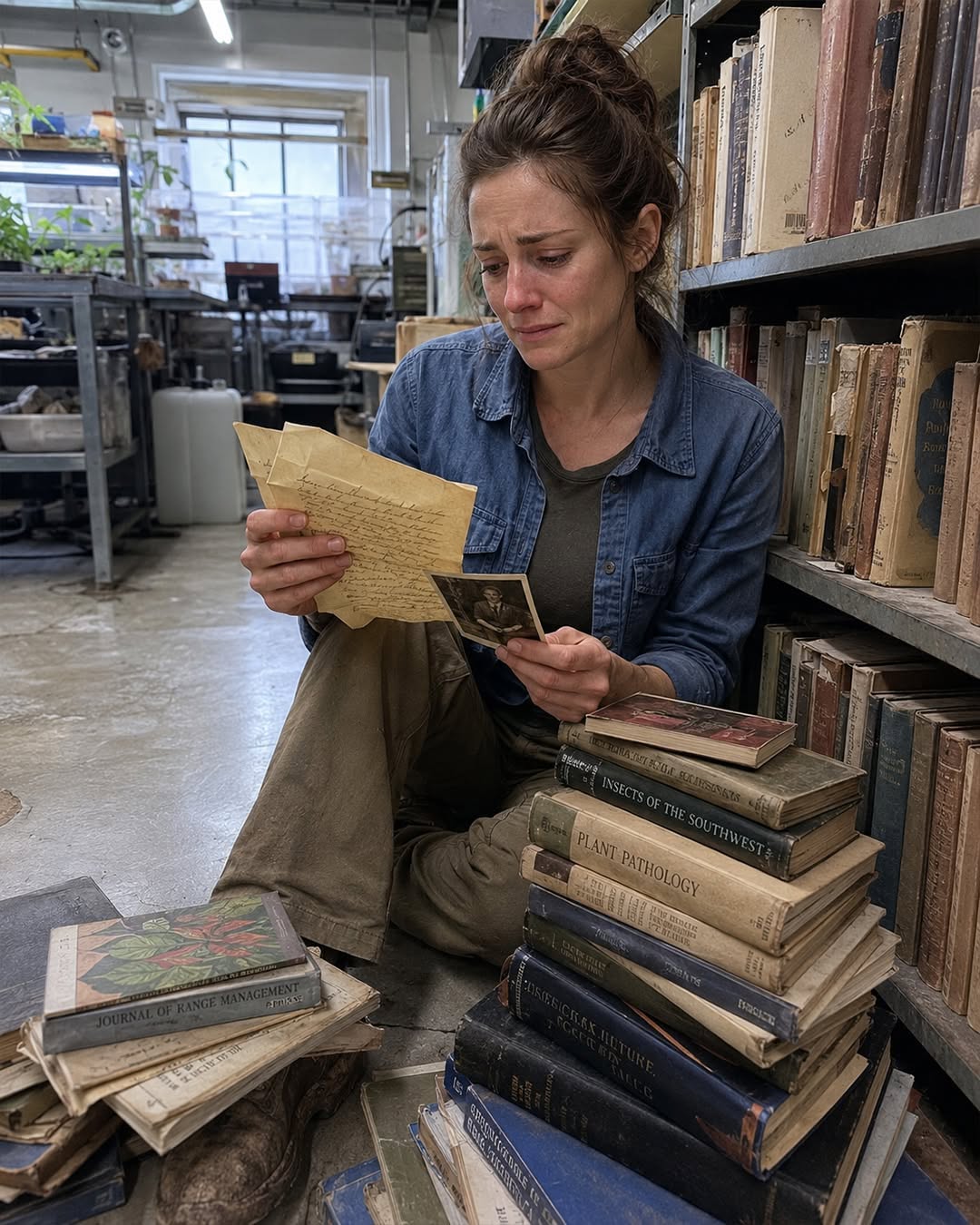
Yesterday, I was cleaning one of the old bookcases in the lab’s library when I hadn’t touched in years. Inside a worn out copy of The Nature of Things, I found a photograph. I knew right away, just by the faded edges, that it was me.
I must have been about 9 years old, crouched in the grass behind the barn, holding a magnifying glass up to a beetle on a leaf. Grandpa was standing beside me, pointing at something in the distance. We were both smiling.
On the back of the photo, in his neat and careful handwriting, he had written, “My little scientist will change the world someday.”
I sat there for a long time holding it like it was something precious because now I know he was.