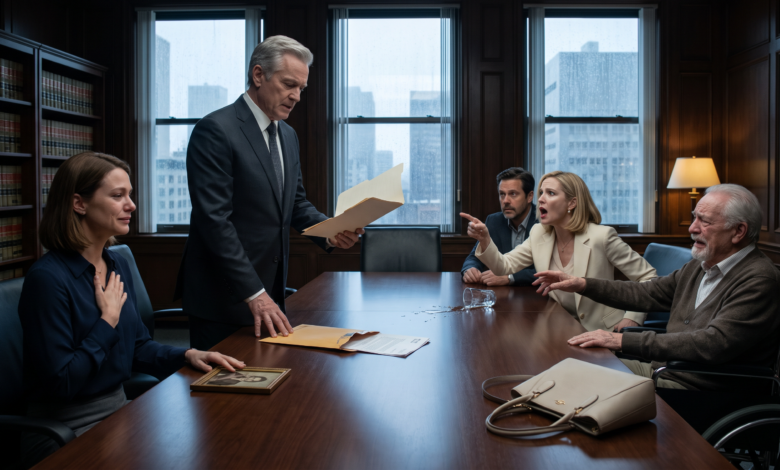
For most of her life, Candace felt like she never truly belonged. Family gatherings were uncomfortable, conversations often left her feeling excluded, and she quietly carried the belief that she was somehow different from everyone else. Although her father cared deeply for her, there were many things left unsaid, and those unanswered questions followed her well into adulthood.
Everything changed after her father’s passing, when the family gathered to settle his estate. Along with the legal documents came a request he had carefully prepared years earlier. He wanted certain questions about the family’s history to be answered once and for all. His attorney explained that the process was not about creating conflict but about ensuring honesty and protecting the people he loved.
As the meeting unfolded, unexpected information came to light. DNA testing confirmed that Candace was indeed her father’s biological daughter. While this result brought relief to some family members, it also revealed another surprising truth: Alyssa, the daughter everyone had always assumed shared the same biological connection, did not.
The room fell silent.
For years, assumptions had shaped the family’s relationships. Candace had often been treated as though she were an outsider, while Alyssa had grown up believing she fully understood her place within the family. In a matter of moments, those long-held beliefs were replaced by facts.
Yet the greatest surprise was not about biology.
Before his death, Candace’s father had written heartfelt letters explaining that he had known much more about the family’s history than anyone realized. He admitted that he had made mistakes by remaining silent when he should have spoken up. He expressed deep regret for allowing misunderstandings to continue for so many years and apologized for not protecting Candace from the emotional distance she experienced while growing up.
His words were filled with honesty rather than blame. He explained that love and responsibility are not always demonstrated perfectly and acknowledged that fear had influenced many of his decisions. Although he could not change the past, he hoped his family would find healing through the truth.
The letters also reminded everyone that family is about far more than genetics. While biological relationships can answer certain questions, they do not determine the value of a person or the strength of the bonds created through years of love, care, and shared experiences.
For Alyssa, the discovery was overwhelming. She realized that much of what she believed about her identity had been based on incomplete information. Instead of reacting with anger alone, she began reflecting on how those misunderstandings had influenced her behavior toward Candace throughout their childhood.
Gradually, the two women started having honest conversations for the first time.
They spoke about old memories, misunderstandings, and the pain each had carried for years. Candace explained how isolated she often felt, while Alyssa admitted that she had never questioned the story she had been told. Both recognized that children often accept the world as adults present it to them.
Those conversations did not erase decades of hurt overnight. Healing rarely happens that quickly. However, they created an opportunity for something neither woman thought was possible—a genuine relationship built on honesty rather than assumptions.
Another meaningful lesson emerged from their father’s final wishes. When discussing his estate, he emphasized that his decisions were guided by love, character, and commitment rather than biological connections alone. His message encouraged the family to value compassion, integrity, and responsibility above everything else.
Over time, these principles began changing the family’s future.
Instead of allowing old disagreements to define them, the sisters chose to focus on understanding one another. They accepted that the past could not be rewritten, but the future could still be shaped through kindness, patience, and open communication.
Their experience also serves as a reminder that family stories are often more complex than they first appear. Assumptions, misunderstandings, and long-kept secrets can create emotional distance for years. While discovering the truth may be difficult, it can also provide an opportunity for growth, forgiveness, and stronger relationships.
Candace eventually realized that her worth had never depended on other people’s opinions or on family rumors. The love her father expressed in his final letters helped her recognize something she had struggled to believe throughout her life: she had always mattered.
Likewise, Alyssa discovered that identity is not defined solely by biology. The relationships we build, the choices we make, and the kindness we show others often have a greater impact than the circumstances of our birth.
In the end, the family’s greatest inheritance was not financial. It was the courage to face the truth, learn from past mistakes, and choose compassion over resentment. While the journey was emotional, it ultimately brought clarity, understanding, and the possibility of reconciliation.
Their story reminds us that honesty, empathy, and forgiveness can transform even the most difficult situations. Although every family faces unique challenges, openness and mutual respect often provide the strongest foundation for moving forward together.