A Landscape Turned Somber: The Arizona Desert Investigation and Its Emotional Impact
The vast, sun-drenched stretches of the Arizona desert have long been associated with both stark beauty and harsh isolation. In recent days, however, this quiet and expansive environment has taken on an entirely different meaning. What was once a place symbolizing uncertainty and the possibility of hope has become the center of a deeply emotional and tragic development. The search effort that captured national attention has now transitioned into a recovery phase, marking a profound shift in tone, purpose, and emotional weight for everyone involved.
For several days, law enforcement agencies, forensic teams, and search-and-rescue specialists worked tirelessly across difficult terrain. The rugged desert landscape, with its uneven rock formations, dry heat, and vast emptiness, made the mission physically demanding and emotionally draining. Despite the challenges, there remained a persistent sense of hope that the individual at the center of the case could still be found alive. Families, investigators, and members of the public alike held onto that possibility, even as the search grew increasingly complex.
However, that fragile hope began to fade as investigators uncovered critical forensic findings that changed the direction of the case. Authorities eventually confirmed that evidence gathered from the field and through subsequent laboratory analysis provided clarity about the situation. This confirmation marked a turning point in the investigation, shifting the official classification from a rescue operation to a recovery-focused effort. The announcement carried a heavy emotional weight, signaling a conclusion that many had feared but hoped would not be realized.
A Family at the Center of Public Attention
At the heart of this unfolding situation is a family facing an unimaginable emotional burden. Among them is NBC News anchor Savannah Guthrie, whose connection to the case has drawn significant public attention. While the broader public has followed updates through news broadcasts, social media discussions, and official statements, the reality for the family is far more personal and painful than any headline can convey.
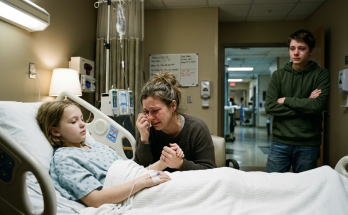
For those directly involved, the experience is not simply a news story or a developing report—it is a life-altering emotional crisis. The shift from uncertainty to confirmation of loss represents a deeply painful transition. It is the moment when hope, however fragile, gives way to grief, and when questions begin to replace expectations of reunion.
The emotional process that follows such a development cannot be rushed or simplified. Families often find themselves moving through waves of disbelief, sorrow, confusion, and reflection. In this case, the Guthrie family is described as beginning the difficult journey of adjusting to a new reality—one that permanently alters their sense of normal life. Behind closed doors, away from cameras and public commentary, they are navigating the early stages of grief, trying to process the weight of what has been learned.
The Role of Authorities and Forensic Investigation
Law enforcement officials involved in the case have emphasized that the confirmation did not come lightly or quickly. According to investigators, the conclusion was reached only after extensive forensic review, cross-referencing physical evidence, and ensuring that all available data was carefully analyzed. This methodical approach is standard in cases where clarity is essential, and where accuracy is necessary not only for public communication but also for any future legal proceedings.
Authorities also took steps to inform the family privately before releasing any public statements. This practice is intended to give those most affected a moment of privacy and dignity before facing public awareness of the situation. While such moments cannot erase the pain, they are considered important in allowing families a brief space to absorb life-changing news without immediate external pressure.
Despite the confirmation, investigators have made it clear that their work is far from finished. Establishing what happened is only one part of the broader process. Questions regarding sequence of events, potential contributing factors, and digital or physical evidence remain central to the ongoing inquiry. Detectives are reportedly reviewing timelines, analyzing electronic records, and examining physical locations relevant to the investigation, including areas connected to a residence in Tucson and surrounding desert regions.
This continued investigation highlights a critical distinction in such cases: closure in terms of identification or confirmation does not necessarily mean closure in terms of understanding. Instead, it often opens a new phase of investigative work focused on accountability, reconstruction of events, and determining whether any additional factors contributed to the outcome.
The Emotional Transition from Search to Grief
One of the most difficult aspects of situations like this is the abrupt emotional transition experienced by families and communities. During the search phase, there is often a sense of urgency and collective effort. Hope plays a central role, even when outcomes are uncertain. Volunteers, law enforcement, and community members come together with a shared objective: finding answers and, if possible, ensuring a safe return.
When that mission shifts from rescue to recovery, the emotional landscape changes dramatically. Hope, once a motivating force, begins to give way to acceptance of loss. This transition is rarely immediate. Instead, it unfolds gradually as official updates clarify the situation. Families are often left navigating between disbelief and understanding, trying to reconcile expectations with reality.
For those close to the situation, including Savannah Guthrie and her family, this moment represents a deeply personal turning point. Public figures often experience an added layer of complexity, as their private grief becomes indirectly connected to public attention. Even when privacy is respected, the awareness that others are observing from a distance can add emotional strain.
Still, the central experience remains fundamentally human: a process of mourning, reflection, and adjustment to a profound absence. In the early stages, individuals may struggle with simple daily routines, as emotional processing requires time and space that are often difficult to find in the aftermath of tragedy.
Community Response and Shared Mourning
As news of the development spread, communities in Arizona and beyond responded with expressions of sympathy and solidarity. In times of collective emotional impact, people often seek ways to express support, whether through gatherings, messages of condolence, or quiet personal reflection. In this case, vigils were reported in various areas, including outdoor gatherings under the desert sky, where individuals came together to honor the situation and offer emotional support to the affected family.
These acts of collective mourning serve an important social function. They provide a space for shared grief, allowing individuals who may not personally know those involved to still participate in an act of empathy. Messages of support, both locally and online, reflect a broader recognition of human vulnerability and the importance of compassion during difficult times.
The response also highlights how modern communities engage with unfolding events. In the digital age, news spreads rapidly, and emotional reactions often appear across multiple platforms almost immediately. While this connectivity can amplify awareness and support, it can also introduce challenges, particularly when speculation begins to circulate before official information is fully confirmed.
The Importance of Responsible Public Communication
In response to widespread attention, law enforcement officials have encouraged the public and media to exercise caution and patience. They emphasized that premature assumptions or speculative narratives can interfere with ongoing investigative efforts. In complex cases involving forensic evidence and evolving timelines, accuracy is essential, and conclusions must be based on verified information rather than conjecture.
This reminder is especially important in the context of social media, where information can spread rapidly and sometimes without verification. Authorities stress that responsible communication helps preserve the integrity of both the investigation and any future legal processes that may arise from it.
Justice, in these circumstances, is not immediate. It requires careful analysis, corroboration of facts, and a commitment to thorough examination of all available evidence. This process can take time, but it is designed to ensure fairness, accuracy, and accountability.
The Continuing Search for Understanding and Accountability
Although the confirmation of forensic findings marks a significant moment in the case, it does not conclude the broader effort to understand what occurred. Investigators continue to work through evidence with the goal of constructing a clear and accurate timeline. This includes reviewing digital data, physical evidence, and any other relevant materials that may provide insight into the circumstances surrounding the case.
Such investigations often extend beyond immediate findings, as they aim to answer deeper questions about cause, sequence, and responsibility. The process can be lengthy, but it is essential for ensuring that all aspects of the situation are fully examined.
For the family, however, these investigative steps exist alongside a parallel emotional journey. While authorities focus on evidence and timelines, the family is focused on processing loss and beginning the gradual process of emotional adjustment. These two paths—legal investigation and personal grief—move forward simultaneously but at very different paces.
Reflection, Memory, and the Path Forward
In the aftermath of such deeply affecting events, communities and families often find themselves reflecting on the broader meaning of loss and resilience. While the details of each case are unique, the emotional themes are universally understood: love, uncertainty, grief, and the search for meaning in the face of tragedy.
For the Guthrie family, the coming weeks and months will likely involve continued emotional adjustment. Grief does not follow a predictable timeline. It comes in waves, often influenced by memory, daily experiences, and ongoing reminders of absence. Support from family, friends, and the wider community can play a significant role in helping individuals navigate this difficult period.
At the same time, investigators remain committed to completing their work with precision and care. Their goal is not only to establish factual clarity but also to ensure that all relevant questions are addressed as thoroughly as possible.
Conclusion: A Moment Defined by Loss and the Pursuit of Truth
This unfolding situation in the Arizona desert represents a convergence of emotional grief, investigative diligence, and public attention. What began as a search filled with hope has transitioned into a somber recognition of loss and an ongoing effort to understand how events transpired.
For the family at the center of the case, including Savannah Guthrie, the experience marks a profound personal turning point. For investigators, it represents a continued responsibility to uncover truth through careful and methodical work. For the wider community, it serves as a reminder of the fragility of life and the importance of empathy in moments of collective sorrow.
While answers are emerging, the emotional impact remains ongoing. Healing, understanding, and resolution will take time. For now, the focus remains on honoring the individuals affected, respecting the investigative process, and recognizing the shared humanity that connects all who are touched by the story.