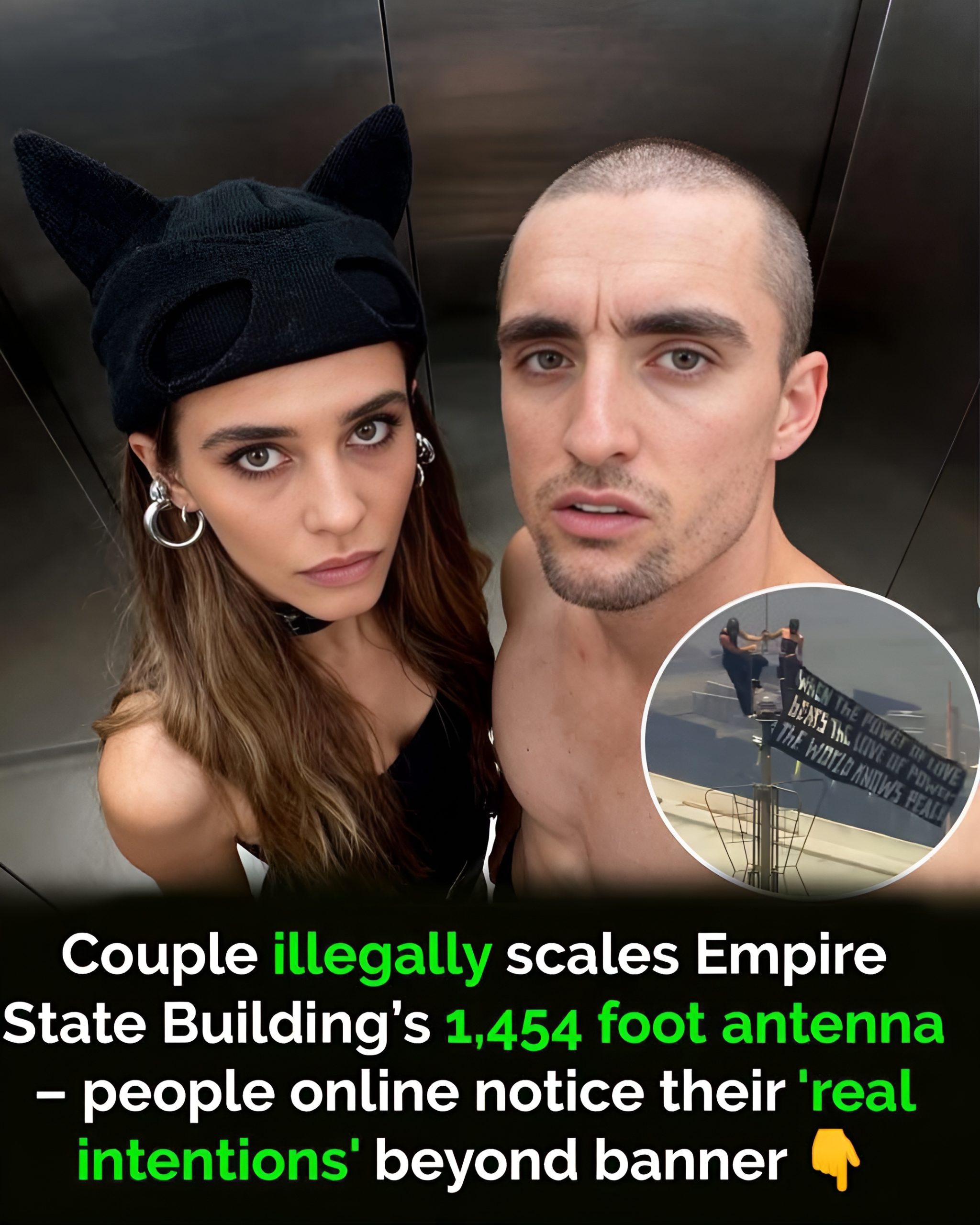
What began as **”a carefully staged spectacle”** quickly became a public debate about love, attention, and the pursuit of viral fame. While some people saw the dramatic proposal as a romantic continuation of the couple’s Netflix story, many others believed it was more about publicity than genuine emotion.
Critics described the event as **”a brand activation masquerading as bravery”** and **”a peace slogan wrapped around a publicity stunt.”** Although only the couple took the risk, the stunt disrupted many others. Tourists who had purchased tickets were unable to visit the attraction while the event unfolded, leading to frustration and criticism from both visitors and people following the story online.
The incident quickly spread across social media, where reactions were sharply divided. Some admired the bold proposal and its cinematic style, while others expressed growing frustration with influencers who, in their view, treat public spaces and famous landmarks as stages for creating viral content. The discussion expanded beyond the proposal itself, raising questions about where personal expression ends and public inconvenience begins.
In the end, the excitement faded as authorities intervened. **”The banner came down, the antenna emptied,”** and the couple left the site under arrest rather than as celebrated internet stars. Their highly publicized moment became a reminder that actions carried out for attention can still have real-world consequences, regardless of how they are received online.
The story ultimately showed how quickly a romantic gesture can become a wider conversation about responsibility, social media culture, and the limits of public spectacle. For many observers, it demonstrated that **”even the most cinematic love story still has to answer to the ground,”** where laws, public safety, and the rights of others remain more important than going viral.